The Gallery is open
Monday 3:15 pm-7pm
from Tuesday to Friday 11:15 am- 1 pm and 3:15 pm-7pm.
Saturday 3:30 pm-6:30 pm
and by appointment
Latest.
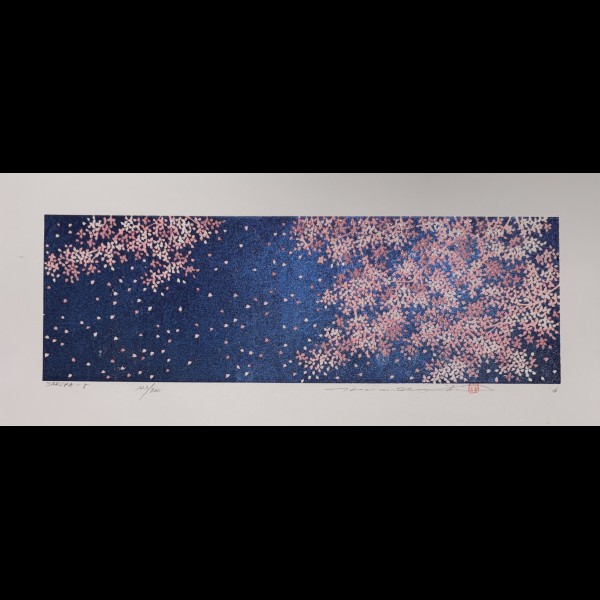
SAKURA
A beautiful, signed, numbered print on a silver background.Sosaku HangaNishiki-eSosaku HangaNishiki-eBorn in Tokyo in 1947, Hajime Namiki was initially a sculptor before dedicating himself to woodblock printing in 1978, in the sosaku hanga style.His works combine the use of oil-based pigments with gold or silver leaf.Namiki finds his inspiration in nature, Mount Fuji, and floral motifs.Having become a major player in contemporary Japanese woodblock printing, he has seen several of his works enter major American collections, including those of the White House, the Art Institute of Chicago, the Museum of Art in New Orleans and LACMA in Los Angeles...
350.00 €
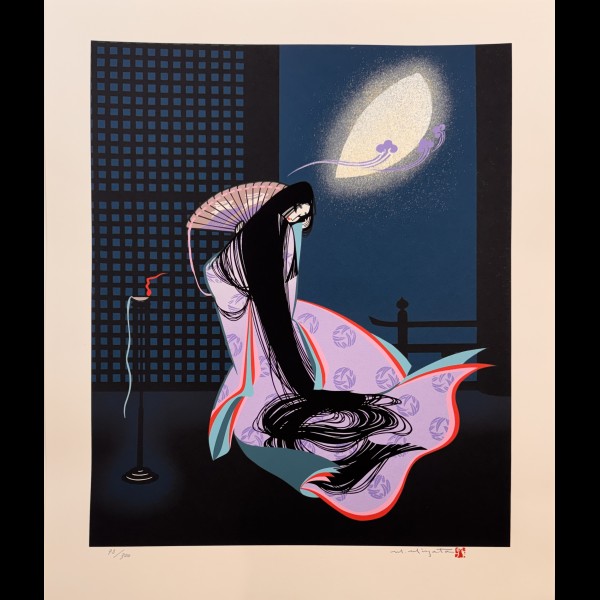
LA PRINCESSE KAGUYA PLEURE A LA VUE DE LA LUNE
From the sequel: The Tale of the Bamboo CutterVery fine impression, signed and numbered 93/300, gold highlights on the moon.A Japanese artist specializing in kiri-e (paper cutting), he was selected in 1995 as the United Nations' official artist of the year.He created illustrations for modern publications of classic Japanese literature, including Oku no Hosomichi, The Tale of Genji, and The Tale of the Bamboo Cutter.Some of his works are still published today by Kodansha International...
430.00 €
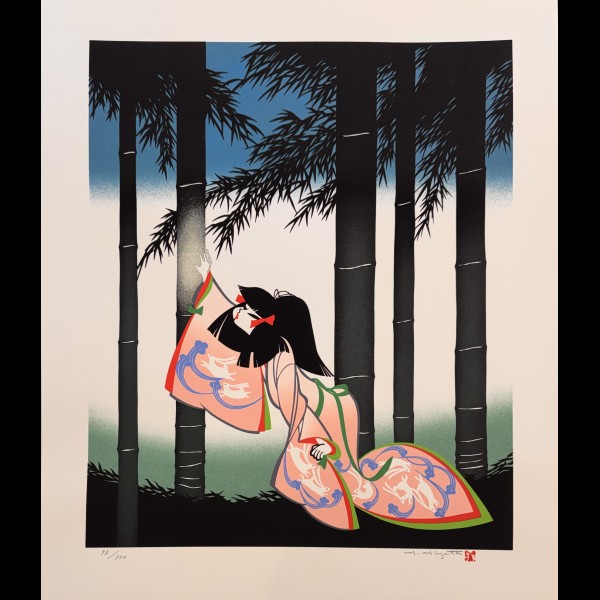
LA PRINCESSE KAGUYA ENFANT
From the sequel: The Tale of the Bamboo CutterVery fine impression, signed and numbered 93/300, gold highlights on the tree.A Japanese artist specializing in kiri-e (paper cutting), he was selected in 1995 as the United Nations' official artist of the year.He created illustrations for modern publications of classic Japanese literature, including Oku no Hosomichi, The Tale of Genji, and The Tale of the Bamboo Cutter.Some of his works are still published today by Kodansha International...
380.00 €
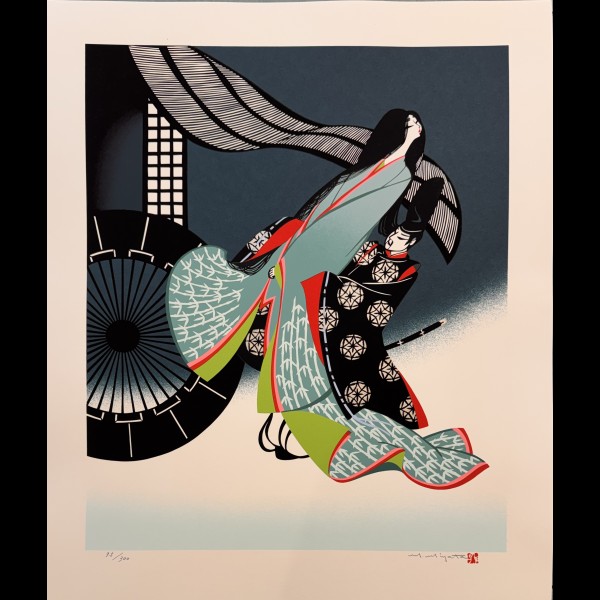
LA PROPOSITION DE L'EMPEREUR
From the sequel: The Tale of the Bamboo CutterVery fine impression, signed and numbered 93/300, silver highlights in some areas.A Japanese artist specializing in kiri-e (paper cutting), he was selected in 1995 as the United Nations' official artist of the year.He created illustrations for modern publications of classic Japanese literature, including Oku no Hosomichi, The Tale of Genji, and The Tale of the Bamboo Cutter.Some of his works are still published today by Kodansha International...
380.00 €